
This Domestic Violence Awareness Month, we’re sharing stories and insights from survivors of domestic violence as well as the service professionals who work with survivors. DVPN stands #WithSurvivors by supporting collaboration amongst local service providers and offering preventative education to youth and adults here in Central Indiana.
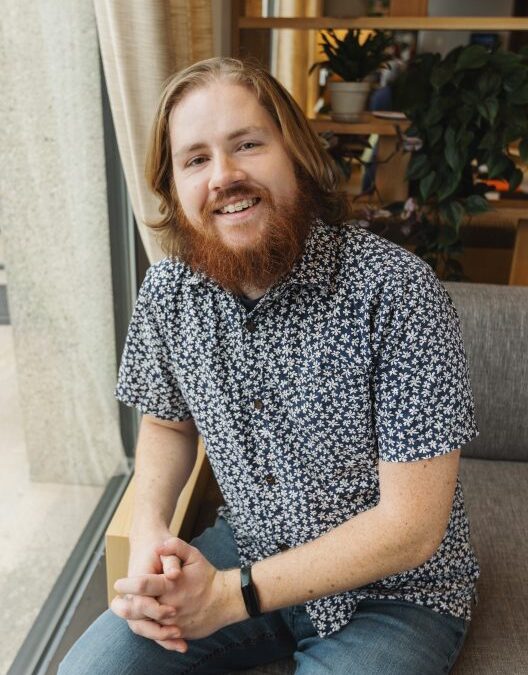
Zachary Anderson is Evaluation and Program Planning Coordinator at ICADV.
What does healing mean to you?
It means reclaiming yourself and the best parts of what others have shared with you. Making sense of the harms and restoring agency over how they live with you. Allowing that whole process to transform your relationship with yourself and by extension your relationships with others—especially those you love most dearly.
What gives you hope right now?
Many things. The amount of prairie gardens popping up around my neighborhood and the insects who follow. The children in my life, especially my daughter. It’s not all sunshine and rainbows. It’s not all play all day. More often than not, sometimes good and sometimes not so convenient, they have a presence that reminds you of the worth of right here, right now. They are always teaching me and creating opportunities to love a little more tenderly and hold life a little more lightly. The reminder of that presence and agency, in the moment, is really hope restored for me.
What do you wish people understood about domestic violence that they often don’t?
I think there are the standard answers—that domestic violence is more than physical and that it’s harmful to shame a survivor into leaving (especially when we know how difficult it is based on a variety of factors including economic abuse). But in my conversations with community members, I often hear a lot of support for survivors and a lot of personal connection to this issue. Many people care deeply what happens to survivors. I wish people understood how much it matters to survivors and to their communities to make space for that more—to speak up more often about domestic violence. Let’s not make it a one-month issue. It’s an everyday issue and talking about it more, figuring our way through the nuance like we have on other issues (at least in my community) like supporting people in recovery or with food insecurity would matter a great deal. I think it would allow us to really understand how often it occurs.
When we consider too the accountability and prevention elements to domestic violence, silence and invisibility around this issue get in the way of stopping the violence and harm. How can we support folks with living into healthy and thriving relationships if we do not talk about it?
What role do you think friends, coworkers, neighbors, educators, faith communities, or other community members can play in prevention?
This is a little embarrassing to share, but when I first became a homeowner I may or may not have left some weeds grow without control.
Years later, I am still working hard to keep them manageable. I think it is similar with domestic violence. It is only in the last few generations that we started to change laws to make domestic violence illegal, and there are still gaps in protections. We’ve inherited a garden where this issue has existed for generations. I think it will take time for us to stop domestic violence and it will certainly take more than one gardener. The more folks involved, especially from different parts of the community, the more we can spread the labor of saying “we don’t want domestic violence, coercive control, to be a thing in our community. We don’t want it for our mothers, our fathers, our sons, our daughters, our neighbors, etc.” I think most people would agree with that statement, so if they can identify ways to contribute to this effort, it would be so welcome. Survivors have asked for broader support and it is with their most informal relationships they often turn to first. We all have a role to play, we just have to find it. Many small roles together can have a big impact. Just ask the pollinators who help those weeds persist in my yard, haha.
And to make it a little more concrete, starting anywhere helps. Don’t feel like you have to have it figured out. Seek learning in areas you feel you need, but having that open stance to helping and caring matters. Even if I didn’t do this work, I share part of the work through how I keep open and safe relationships with my daughter, my nieces, and nephews. To help be a guide in figuring out how to navigate this world and to be someone safe to rely on before, during, and after a crisis. Hopefully, the young people in our lives never experience some of these harms, but if they do, I want to be ready to respond and have been an imperfect human trying their best to model safety and love for them. If they are harmed, I am here to support you. If you caused harm, let’s figure out accountability. I am constantly learning how to hold that openness from them. I do hope they never have to experience that.
What do you wish someone had told you (or what do you wish more people knew) about supporting someone experiencing abuse?
Focus first on connection, focus less on solution. When going through that experience, give space, give oxygen for them to breathe. That matters way more, at least in the ways I have encountered most survivors, than jumping to solution mode (assuming there is not an immediate crisis requiring a solution). Focus on building trust and then let’s go from there based on what they want/need. When we jump to solutions and conclusions, we unintentionally become another person telling them what to do. Let them build trust with you and keep that door cracked for asking you for what they need. Trust that process, as difficult as it can be sometimes. I think it matters in the long-term more to them, both for how they feel and how they navigate the situation as well as for just being more effective as a support.
If you could leave our community with one message during DVAM, what would it be?
Survivors need support from every part of the community. Even if domestic violence programs were not experiencing funding loss right now, they would still need support from the community to shoulder the responsibility of uplifting and empowering survivors. One of the deep joys of my work is meeting people outside of our direct support work—pastors, a banker, an HR person, and others. They ask, “Is this okay? I want to help in some way.” And being able to reflect that affirmation back and say, “What you are doing matters.” A survivor now knows her pastor will not only be there for spiritual support, but will also help her get connected with resources when she needs them. A survivor has access to resources that help her get her first month’s rent because a bank helped make that support more possible. A survivor feels like she can disclose a stalking situation and get support from her company so she can keep working while maintaining her safety. These are the kinds of broader supports survivors are asking for, and it’s something we need so much more of.
You can get involved in so many different ways: join a board, donate, volunteer, build a partnership, or even access training to identify your own role in supporting survivors. That is part of why we created the Grassroots Supports Learning Series—to create a place for community members to identify the unique ways they can meaningfully support survivors. We all have a role to play. We just have to find it. <3