
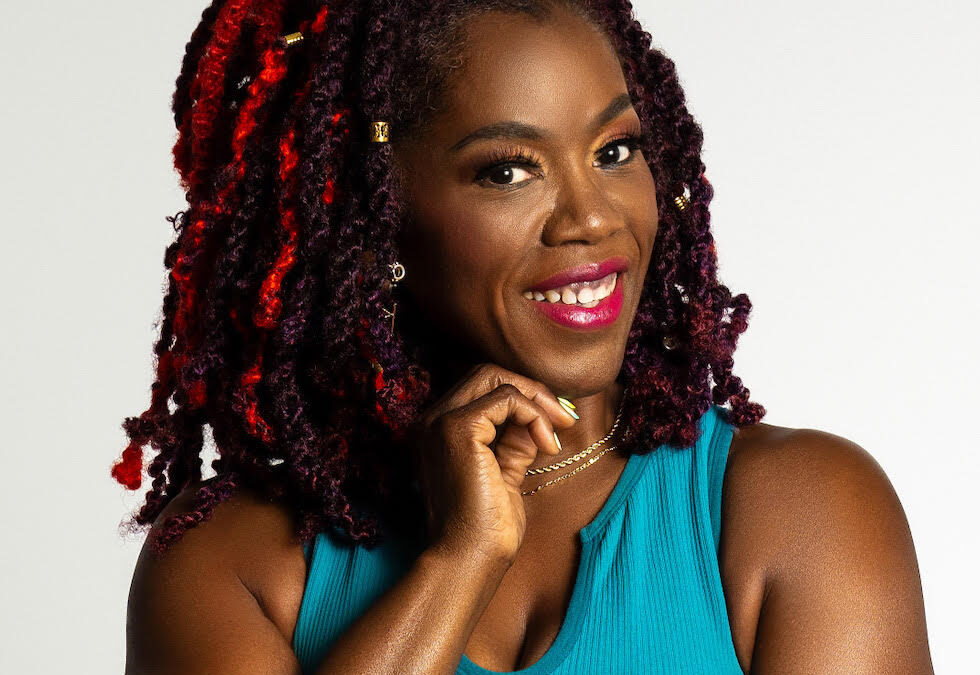
Vikki Gladney is a domestic violence, drug use, and childhood trauma survivor, small business owner, and founder of Natural Measures, a fitness and cycling studio in Indianapolis, as well as Safe Space Through Fitness, a nonprofit organization that helps individuals achieve their wellness goals by promoting healthy habits and disciplines that improve physical and mental well-being. She is also the speaker at this year’s Commemoration Ceremony, Hope and Healing.
What does healing mean to you?
Healing means embracing the truth and embracing my authentic self. I want to be able to show up as who I am in every space and speak honestly about my why. It means acknowledging who I was, where I am, and the different thresholds I’ve crossed, while trusting who I’m becoming. Healing isn’t a one-stop shop. It’s an ongoing process.
What gives you hope right now?
My newfound ability to ride the wave and trust what’s on the other side gives me hope. I’ve learned that I can hold on and see a process through, whether it’s good, bad, hard, or easy. I have grace to grow. I’m learning my patterns, setting my boundaries, and honoring my non-negotiables.
What do you wish people understood about domestic violence that they often don’t?
Domestic violence doesn’t always make sense from the outside, and it can’t always be explained away. The harm isn’t always something you can see or touch. Leaving isn’t always as simple as walking out or calling for help. Someone may be trying to survive a situation they don’t yet have the language, resources, or safety to navigate. Some people don’t even realize they’re in an abusive relationship.
What role do you think friends, coworkers, neighbors, educators, faith communities, or other community members can play in prevention?
We need to teach young people what healthy relationships look like and help people recognize unhealthy behaviors before abuse takes shape. I’d also like us to talk more about coping skills and accountability for people who may cause harm. We can learn from our own trauma without repeating the behaviors that hurt us.
That takes open, honest conversations about the intimate parts of life. I believe that kind of transparency is still missing in many communities and faith spaces. We have to ask: Are we teaching healthy behaviors? Who is helping people recognize when their behavior is harmful and showing them how to change? To me, prevention includes education, accountability, and a real opportunity for reform.
What do you wish someone had told you (or what do you wish more people knew) about supporting someone experiencing abuse?
To the people supporting someone experiencing abuse: ask for help, too. You may need guidance, support, and a safe place to turn as you help them. Good intentions matter, but so does knowing how to take the next step without putting the person experiencing abuse—or yourself—in greater danger. You don’t have to figure out advocacy alone.
If you could leave our community with one message during DVAM, what would it be?
Keep being loud about this work. Keep showing up for people experiencing abuse, and keep advocating for prevention, support, and change. We need laws and community services that help people before tragedy strikes, so families aren’t left to fight for answers afterward.
That means speaking up in our neighborhoods and faith communities, and from a legislative and public service perspective. The people who make and enforce our laws also need the tools to respond with care, manage difficult situations, and de-escalate harm. Keep being loud about the work. Keep being loud about the advocacy.