
This Domestic Violence Awareness Month, we’re sharing stories and insights from survivors of domestic violence as well as the service professionals who work with survivors. DVPN stands #WithSurvivors by supporting collaboration amongst local service providers and offering preventative education to youth and adults here in Central Indiana.
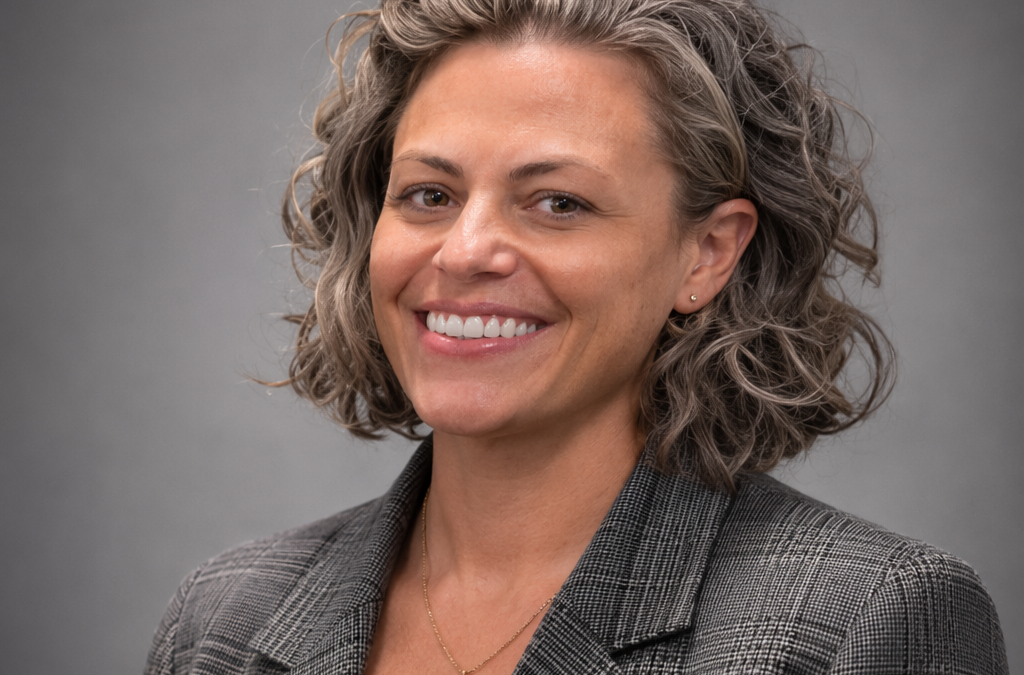
Elizabeth Fry is a Licensed Clinical Social Worker (LCSW) who serves as the Intimate Partner Violence Assistance Program (IPVAP) Coordinator at the Richard L. Roudebush VA Medical Center in Indianapolis, Indiana
What does healing mean to you?
Healing looks different and is unique to each person and their unique experiences. So, to me healing means whatever it means to the person standing in front of me.
What gives you hope right now?
My colleagues. We just celebrated 100 years of social work within the VA. Working within social work is challenging at baseline. Despite additional challenges added to their plates, my colleagues keep showing up and keep doing the hard work. I see them continuing to lead with integrity, refusing to reduce Veterans to checklists, advocating within treatment plans, in crisis moments, and in quiet conversations with families. I see them holding clinical standards high in a complex system that is often strained.
Social work in this system has always required both heart and backbone. We sit at the intersection of clinical care and systems navigation. We hold trauma stories while navigating federal processes. We advocate within constraints. That dual responsibility is not small, and it is not easy. They inspire me daily and motivate me to keep up the good fight.
What do you wish people understood about domestic violence that they often don’t?
- It’s not something people choose to experience or choose to remain within.
- It’s so much more complicated than the average person realizes, and it impacts exponentially more people than the average person realizes.
- For many people, staying in the relationship is easier than overcoming the numerous barriers to exit. The systems they must navigate to exit are extremely complex, burdensome, and time-consuming. It’s never as simple as “just leaving”.
What role do you think friends, coworkers, neighbors, educators, faith communities, or other community members can play in prevention?
- Flip the script. When you hear or see victim-blaming or double standards, name it. This can be an offhand comment, a joke, or even a news article that shifts responsibility onto the person being harmed rather than the person causing the harm. Calling out these moments helps change the narrative and reinforces accountability.
- Believe people. When someone finds the courage to disclose abuse, believe them. There is no benefit to fabricating an abusive experience, and the act of disclosing often carries significant emotional, social, and safety risks. Belief is a powerful intervention.
What do you wish someone had told you (or what do you wish more people knew) about supporting someone experiencing abuse?
I wish people understood supporting someone experiencing abuse is not a neat, linear process. And that’s okay. They may go back. They may minimize what’s happening. They might feel ashamed, conflicted, or emotionally attached to the person hurting them. And as a supporter, you can feel worried, frustrated, or unsure of what to say. But your steady, non-judgmental presence matters more than perfect words or timing. Safety & readiness look different for everyone. You don’t need to fix the situation. Consistency and keeping a non-judgmental door open are key.
If you could leave our community with one message during DVAM, what would it be?
You already know someone who is experiencing – or has experienced – intimate partner violence. They are watching and listening to how you respond when others disclose experiencing violence, and how you react when someone is accused of using violence. Your words, your silence, your defensiveness, your curiosity, your willingness to name harm or your tendency to minimize it – all of it communicates something. Every reaction you have teaches them whether you are someone who can safely hold their story…or not.
During DVAM, and every day after, remember that your presence in those moments can either open a door or close one. I encourage you to show up in a way that makes the door easier to open.